How to use a Demo Trading Account Effectively: Test Strategies Without Risk
Bader AlRoudan
October 15, 2025
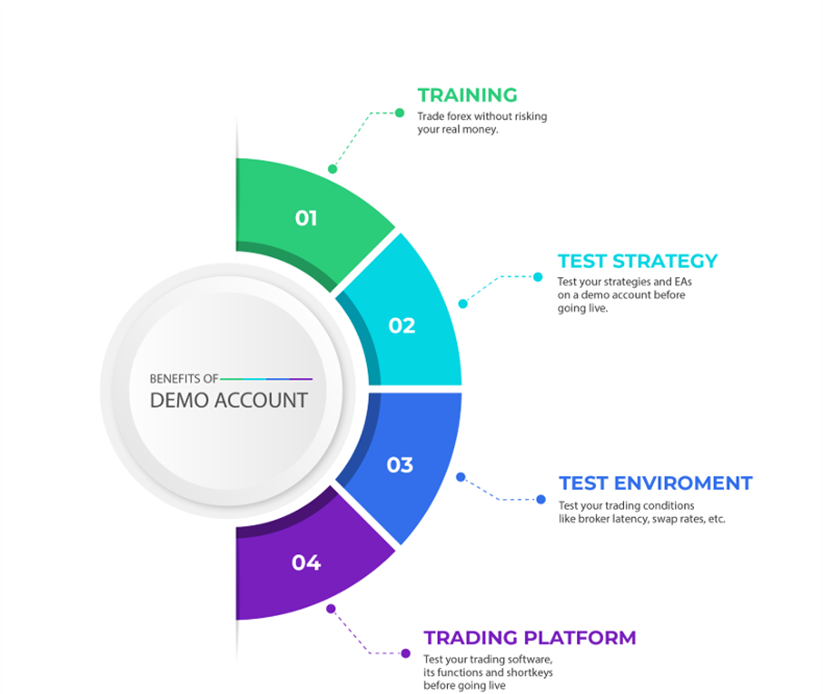
In the high speed world of trading, demo accounts are no longer just a “simulation”, they’re essential. They give you a risk free playground to experiment, refine, and build confidence all before putting real money on the line.
What Makes a Demo Trading Account Special?
Virtual Funds, Real Learning
A demo account uses virtual capital, letting you execute trades without risking actual money. You can test ideas freely, experiment with markets, and see outcomes all without the stress of real loss.
Simulated Execution vs. Live Market Realities
While demo accounts aim to mimic real markets, they often smooth over challenges such as slippage, delay in order fills, or spreads widening during volatility. In live trading, these frictions are part of the game.
No Emotional Pressure For Better or Worse
Without real money on the line, you won’t feel fear, greed, or stress. That’s a double edged sword: you’ll trade more freely, but you won’t learn how to make decisions under pressure, which is a critical skill in live markets. Start Demo Trading now
Even experienced traders sometimes step back into demo mode to regain mental clarity. It allows them to recalibrate, rebuild discipline, and refine approach without financial pain.
Tool & Automation Trials
Planning to test a robot, algorithm, or trading tool/indicator? Demo accounts provide a safe space. You can spot bugs, evaluate performance, and stress test without risking real capital.
Pitfalls to Watch Out For:
• Emotions: Decisions made in a “no risk” environment may not hold up when real money is at stake. • Underestimating risk: Demo accounts likely lead traders to adopt more relaxed or careless risk management habits, you might ignore worst case scenarios. • No slippage or execution delays: Execution in live markets can deviate from your demo experiences, with price slippage or fill delays based on the ask/bid and liquidity prices.
Tips to Make Demo Trading More Realistic & Valuable
1. Treat your demo trades like real ones, enforce rules and deadlines or for example limit and put the lowest amount/captial as if its your real initative amount. 2. Log every trade and analyze performance objectively, no need to rush, it’s a simulation. 3. Apply serious risk management, set stop losses, define risk ratios, don’t over financial leverage or over trade. 4. Occasionally “simulate stakes” (imagine you would lose real money) to build emotional resilience. Demo trading accounts are more than a learning tool, they are typically a bridge between theory and real trading account. Used wisely, they help you test trading strategies, rebuild confidence, and avoid costly mistakes. But don’t forget, the live market adds execution stress, emotional heat, and real consequences for reckless trading. The lessons you learn there will be the most valuable of all.
Disclaimer: The content published above has been prepared by CFI for informational purposes only and should not be considered as investment advice. Any view expressed does not constitute a personal recommendation or solicitation to buy or sell. The information provided does not have regard to the specific investment objectives, financial situation, and needs of any specific person who may receive it, and is not held out as independent investment research and may have been acted upon by persons connected with CFI. Market data is derived from independent sources believed to be reliable, however, CFI makes no guarantee of its accuracy or completeness, and accepts no responsibility for any consequence of its use by recipients.