Why Didn’t Oil and Gold Spike? Geopolitical Tensions and Commodity Prices
Christy Achkar
June 24, 2025
During the weekend, headlines were dominated by rising geopolitical tensions in the Middle East. Many market participants expected a sharp reaction in commodities such as oil and gold, expecting a price surge once the market opened. Yet, when Monday came, reality told a different story.
A Muted Reaction in Commodities Prices Amid Geopolitical conflicts
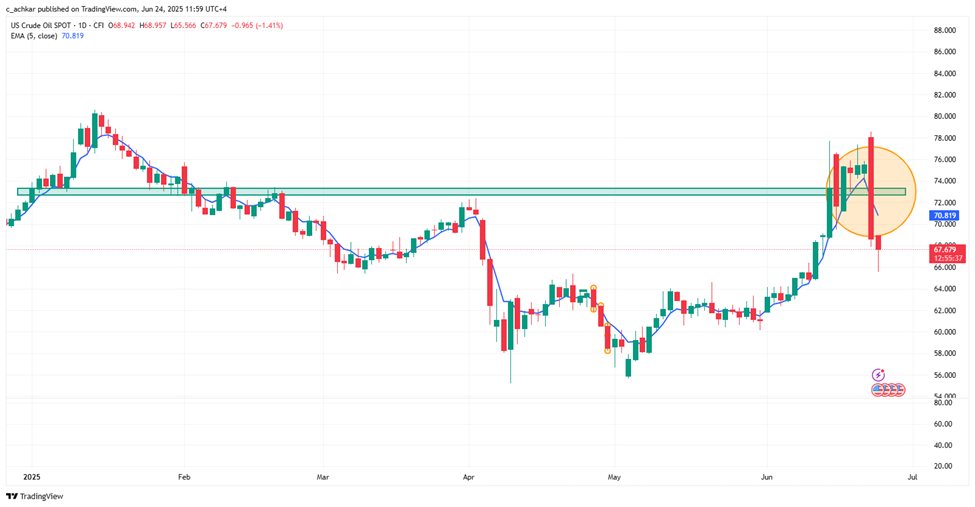
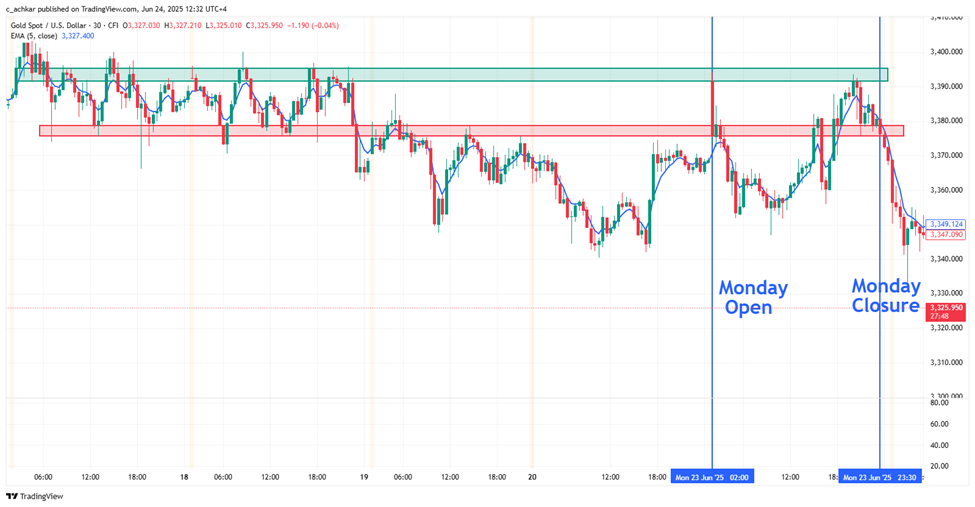
Crude oil and gold had bearish sentiments on Monday despite rising tensions over the weekend. Crude oil (WTI) dropped below key technical levels (Figure 1). At the same time, gold, typically considered a safe haven, tested a strong resistance at around 3,394 and closed slightly lower at approximately 3,376, testing a critical support level (Figure 2).
This reaction left many traders and analysts puzzled. After all, geopolitical tensions have historically driven sharp increases in both commodities due to fears of supply disruptions (for oil), particularly in the Middle East, and risk aversion (for gold). So why didn't prices rise as expected?
Geopolitical Risks Were Already Priced In
One reason could have been that the commodity market had already priced in a fair amount of geopolitical risk. With several prior escalations in the region already priced, traders would have been looking for new shocks such as direct supply disruptions or major escalations. In their absence, there was little fuel for further gains.
Strategic Dependencies Pointed to Restraint?
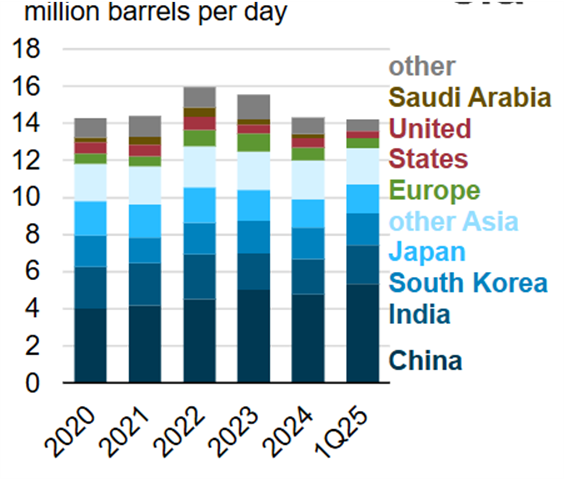
Another overlooked aspect could be the strategic interest of major global powers. Countries like China depend heavily on regional shipping lanes for oil imports and trade, especially those passing through the Strait of Hormuz (Figure 3). A full-scale disruption of this narrow passage would have crippled energy flows and severely disrupted China’s supply chain.
Figure 3: Volume of Crude Oil transported through the Strait of Hormuz, Source: EIA
Such a move would have risked a significant trade disruption, not just for regional players, but also for global powers invested in stability. This economic interdependence among global powers likely indicated that the conflict was unlikely to escalate enough to shock the markets, a point that many traders probably understood implicitly.
Ceasefire Surprise Adds Downward Pressure on Commodity Prices
On Monday night, former U.S. President Donald Trump publicly announced a ceasefire agreement, significantly cooling market fears. As a result, oil and gold came under even more pressure.
What You Can Learn and How to Trade It
·Oil doesn’t rally on headlines alone; it needs real disruptions
·Markets move based on expectations, not just events
What this means for you:
According to the analyst's analysis, the market often tells you it's already priced in when fear is high, but prices drop. That’s a signal not to panic but to think.
The edge isn’t reacting to the news; it’s in spotting the gap between headlines and how the market responds.
Next time tensions rise and prices don’t, ask yourself: Where’s the disconnect? That’s where the opportunity often is.
Disclaimer: The content published above has been prepared by CFI for informational purposes only and should not be considered as investment advice. Any view expressed does not constitute a personal recommendation or solicitation to buy or sell. The information provided does not have regard to the specific investment objectives, financial situation, and needs of any specific person who may receive it, and is not held out as independent investment research and may have been acted upon by persons connected with CFI. Market data is derived from independent sources believed to be reliable, however, CFI makes no guarantee of its accuracy or completeness, and accepts no responsibility for any consequence of its use by recipients.