NFP Report July 2025: US Jobs report impact on interest rates
Sarah Alyasiri
August 1, 2025
Markets are closely watching today, Friday, August 1, 2025, for the release of the U.S. jobs data from the Department of Labor, scheduled for 4:30 PM Dubai time. This data reflects the number of jobs added to the U.S. economy during July 2025, along with the unemployment rate. Below are the key expectations:
Indicator
Forecast
Previous
Non-Farm Employment Change
106K
147K
Unemployment Rate
4.2%
4.1%
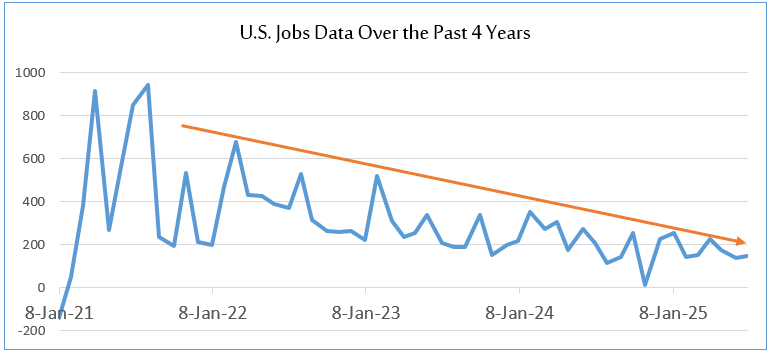
The chart below shows U.S. jobs data over the past 4 years and confirms a continued slowdown in job creation especially given that today’s expected figure is lower than the previous reading. At the same time, unemployment is expected to rise to 4.2% compared to 4.1% previously.
How the US Jobs Report Could Influence Fed Interest Rate Decisions?
When we combine this data with what Federal Reserve Chair Jerome Powell stated in his recent press conference following the interest rate decision on Wednesday, the focus was on the following key points: • No indication was given about a proposed date for cutting interest rates. Any potential rate cut in September will depend on upcoming economic data regarding jobs and inflation. • The labor market will be monitored closely for any signs of weakness. • There are downside risks to the job market.
This suggests that if labor market weakness continues, it could accelerate or push the Fed to implement the first rate cut of the year in its upcoming September meeting especially under increasing pressure from the U.S. administration to speed up the pace of rate cuts. Additionally, the U.S. economy slowed to 1.2% growth in the first half of this year compared to 2.5% in the same period last year, meaning there's little justification for keeping rates elevated at 4.5%.
On the other hand, any surprise showing stronger-than-expected job growth surpassing both the forecast and the previous reading would give the Fed room to maintain its current restrictive monetary policy and justify resisting political pressure, since upcoming decisions will be guided by actual data.
Market Reactions to US Jobs Data: Dollar, Gold, and Stock Market Impact
·
Expected Scenario
Impact on Interest Rates
Likely Impact on Financial Markets according to analysts expectations
Better-than-expected reading and higher than previous
Maintaining restrictive monetary policy
Positive for the U.S. dollar; negative for gold and equities
Lower-than-expected reading
Increased likelihood of rate cut in September
Negative for the dollar; positive for gold and equities
Reading between forecast and previous figure
Greater dependence on next month’s data
Volatile price movements (ups and downs)
Key points to keep in mind:
• The Fed fears cutting rates too quickly could entrench inflation in the economy. • The final interest rate needed to bring inflation down to 2% remains unclear. • There are no clear signs yet of sustained disinflation or a broad labor market slowdown. Therefore, when analyzing the job data, it's crucial to strike a balance between the possibility of continued tightening versus easing of interest rate policy. Overall, we expect market volatility around the release of the data, given that employment and inflation figures are core factors in the Fed’s economic outlook before any change in interest rates.
Important Reminder:
The market's initial reaction, regardless of the actual reading, can often be sharp and erratic before stabilizing. It's also important to remember the golden rule: traders interpret economic data differently, so price movements won’t always reflect the data with 100% consistency.
Disclaimer: The content published above has been prepared by CFI for informational purposes only and should not be considered as investment advice. Any view expressed does not constitute a personal recommendation or solicitation to buy or sell. The information provided does not have regard to the specific investment objectives, financial situation, and needs of any specific person who may receive it, and is not held out as independent investment research and may have been acted upon by persons connected with CFI. Market data is derived from independent sources believed to be reliable, however, CFI makes no guarantee of its accuracy or completeness, and accepts no responsibility for any consequence of its use by recipients.






-1754897970.webp)